
Consultant Insight: FedEx falls hard in its latest earnings report


FedEx reported a surprising fiscal second-quarter decline in revenue and operating income during Tuesday’s earnings call in which CEO Fred Smith described the quarter (period ending November 30) as an anomaly.
Smith reminded those on the call of the shorter holiday season that required planning and expenses to handle volumes that would fall during the company’s fiscal third quarter. He also highlighted continued headwinds in manufacturing and global trade. However, according to Smith, the company expects to see improvements moving forward. Hopefully, among the improvements we’ll finally also see the complete integration of TNT, which was acquired in 2016.
The Ground division was the only division to report positive year-over-year revenue, up 3.4%. Revenue for the Freight division declined 3.9% and Express, the largest division, declined 5.4%.
Within the Express division, package revenue was down 3.8% with U.S. Domestic revenue down 4.4% and International Export package revenue down 3.3%. Freight revenues were down 10.6%. The revenue decline for Express was primarily attributed to the loss of business from a large customer, macroeconomic weakness and trade uncertainty, lower fuel surcharges and unfavorable exchange rates. In addition, one less operating day contributed to the decline in the first half of 2020.
Note the statement above—the loss of business from a large customer—assumed to be Amazon. Evidently, Amazon was a larger customer of FedEx than we were led to believe.
FedEx’s second quarter operating income should perhaps cause some raised eyebrows, as operating income for Express was down 62.5%, Ground was down 42.0% and Freight was down 4.7%. Indeed, fiscal second quarter was a quarter of costs outpacing little, if any, revenue gains.
Average daily volumes were also disappointing, although the Ground division reported a 3.5% increase in volumes. Freight volumes, on the other hand, were down 6%. For Express, Freight volumes were down 3.7% while Package volumes were down 1.5%. Within Package, a positive, International Export package, volume increased 2.7%, but U.S. domestic was the weak spot with a 4.1% decline. FedEx’s loss of a large customer (Amazon) evidently played a role in its U.S. Domestic revenue and volume declines.
A glimpse of the peak season may prove promising for FedEx’s fiscal third quarter earnings. On Cyber Monday, 37.8 million packages were moved. This exceeded FedEx’s projections of more than 33 million packages and represented a 17% increase over Cyber Monday last year. But, similar to Amazon, which also reported a strong Cyber Monday, social media chatter indicated there were delayed deliveries scattered across the U.S. There was no mention of this nor of Amazon’s recent banning of FedEx Ground for its sellers to use for Prime shipments due to poor delivery performance. Perhaps more light will be shed on this during FedEx’s third quarter earnings call.
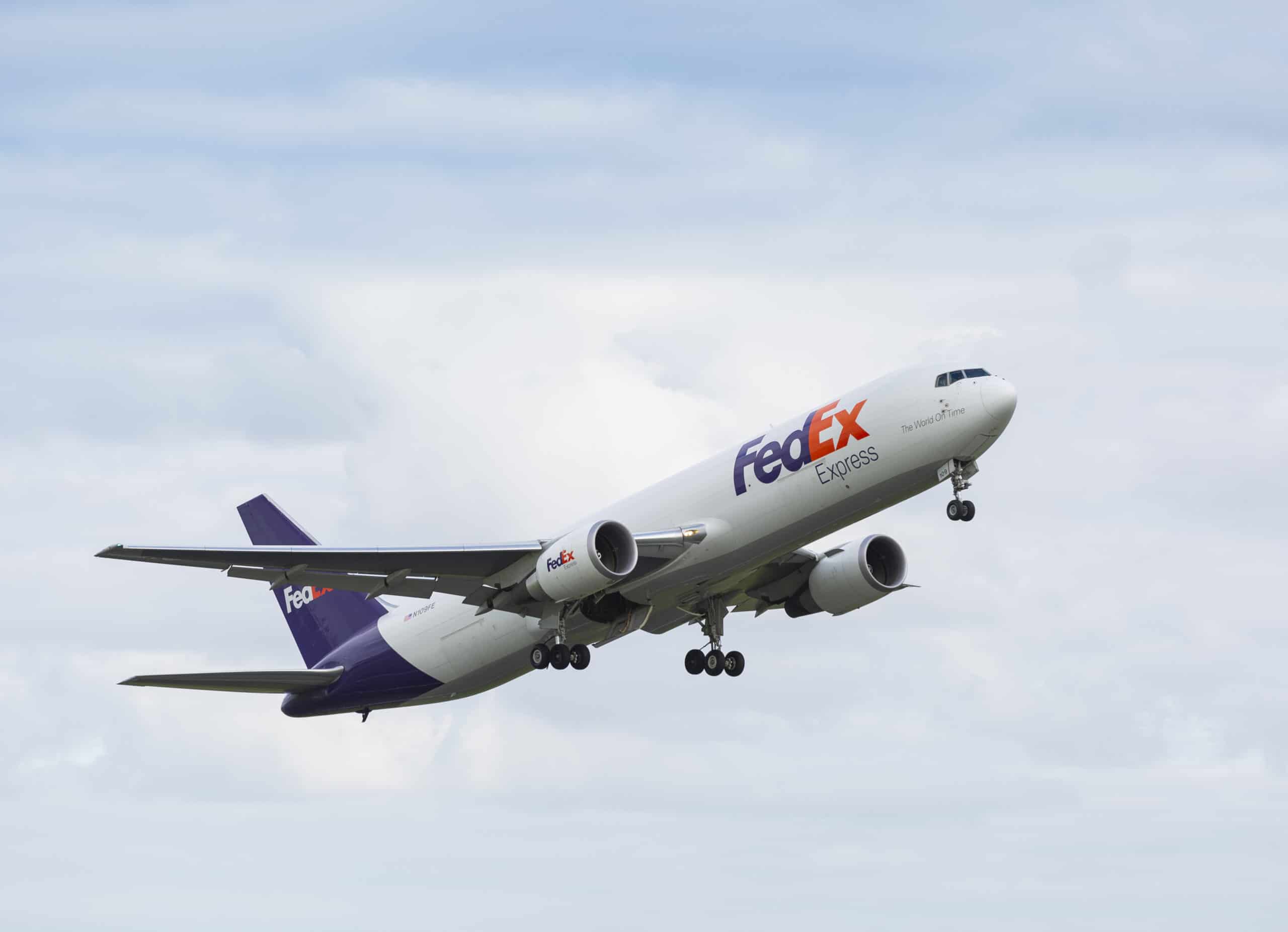
As noted in its press release, Rajesh Subramaniam, FedEx Corp. president and chief operating officer, said that the company is taking actions to address the short-term challenges facing its business, including reducing international flights due to lower demand. A total of 10 A310s will be retired by fiscal fourth quarter and an additional 29 aircraft will be permanently retired over the next 30 months. FedEx will also reduce intercontinental and domestic air capacity post peak. This action, according to Subramaniam will result in the decrease of international and domestic flight hours by about 6% to 8% year-over-year in fiscal fourth quarter.
Despite Smith’s comments during the call regarding headwinds in the global market, FedEx’s second quarter results are not attributable solely to a tough market. If that were the case, why are we not seeing similar reports from UPS—which, by the way, is adding airplanes, not removing them. True, UPS can probably thank its Amazon friends for the need for more planes but overall, UPS is performing exceptionally well. FedEx, however, has not just stumbled but has fallen with a loud thud—Poor planning ahead of what was already known to be a shortened holiday season, higher costs associated with Ground’s seven-day delivery roll-out, the inability to adjust Express’ network in an agile manner, Amazon and the never-ending TNT integration have all weighed on FedEx earnings.
Meanwhile, FedEx lowered its earnings forecast for the year ending May 2020 for a second time. In September, it lowered its earnings forecast to $11 to $13 per share. On the day it released fiscal second quarter earnings, FedEx cut its forecast to $10.25 to $11.50 per share, citing missed revenue targets in all transportation segments and higher residential delivery costs.
FedEx is optimistic that the costs incurred in fiscal second quarter will bear fruit in the quarters ahead. As for me, I’m cautiously optimistic. I hope they are right but in reality, I have my doubts. I believe their overall strategy and execution are flawed and that there is a lack of true vision. But, with that being said, here’s hoping I’m wrong.



Cargo Facts Free Newsletters