
Many Paths Forward: Which Chinese carrier has the right e-commerce strategy?

Geography rules
While each of the carriers has carved out somewhat discernable business models, at present, geography is the most important factor for decision makers. Apart from the standard flights the carriers each serve from hub to hub in China, their individual extended flight networks have evolved into respective zones that stretch into the more rural regions. To boil it down, it’s about location and flight frequency, as far as forwarders are concerned.
“Carrier selection is primarily a function of geography,” said Alex Zhang, general manager, commercial, for YTO Cargo Airlines. “In the Yangtze River Delta, for example, China Eastern Airlines has more capacity, and so our business with the carrier is greater than, say, Air China Cargo or China Southern Cargo.”
There’s a similar story in the Jing-Jin-Ji tri-provincial region, which surrounds Air China’s base of operations in Beijing, as well as Tianjin and Hebei. Guangzhou-based China Southern, meanwhile, has a stronghold in the Pearl River Delta of southern China.
“So far, there is no preference in terms of carrier selection, apart from the flights and capacity offered by carrier,” Zhang concluded, but the perceived lack of differentiation in service is likely to change as competition among the carriers intensifies.
 A new hub redraws the lines
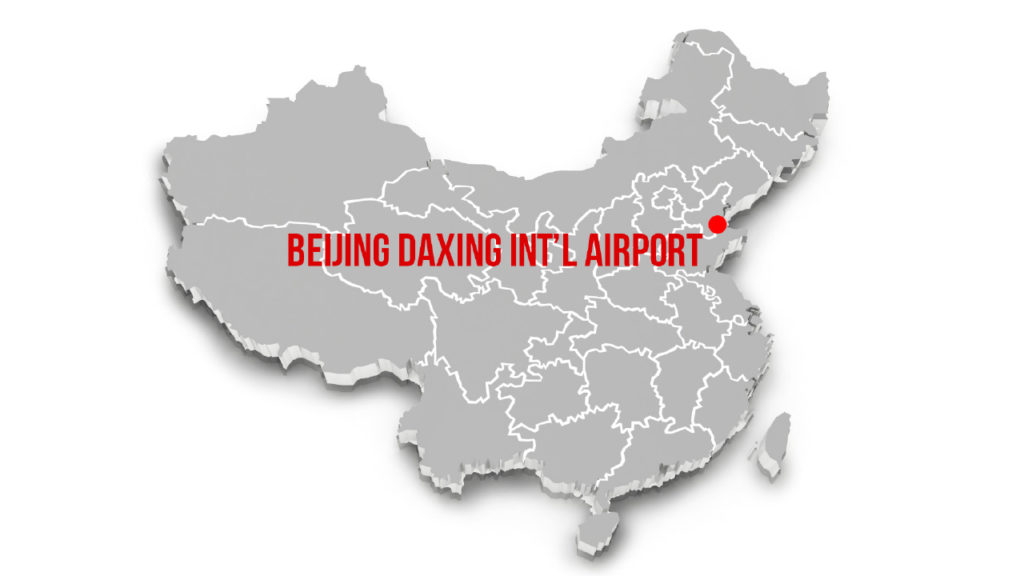
While all of the Big Three carriers have benefited from the increase in demand for e-commerce transportation, a variety of impending challenges will push them to re-strategize. One major factor that will reshape domestic cargo market dynamics in China is the opening of a second airport to serve the Beijing region.
Once operational in 2019, Beijing Daxing Airport will effectively remove Air China’s dominant foothold in the region – as both China Eastern Airlines and China Southern Airlines are expected to base hundreds of flights at the new airport. (China Eastern executives did not respond to several attempts by Air Cargo World to contact them.)
Fengsheng Zhao, senior vice president of China Southern Cargo, affirmed this prediction, saying that China Southern plans to make Daxing Airport its new hub, “with an objective to become the leading airline, having substantial market share at the new airport.”
In terms of capacity, Zhao said cargo handling facilities currently under construction will boast domestic annual handling capacity of 400,000 tonnes and an international annual handling capacity of 200,000 tonnes at Daxing by 2019.
Beyond the impending turf wars between the Big Three carriers, Zhao expects another dimension of competition to emerge from China’s homegrown express carriers, like YTO Airlines and SF Airlines, which are slowly starting to expand the reaches of their own freighter operations.


Cargo Facts Free Newsletters