The Silicon Solution? How robots are reinventing the cargo warehouse

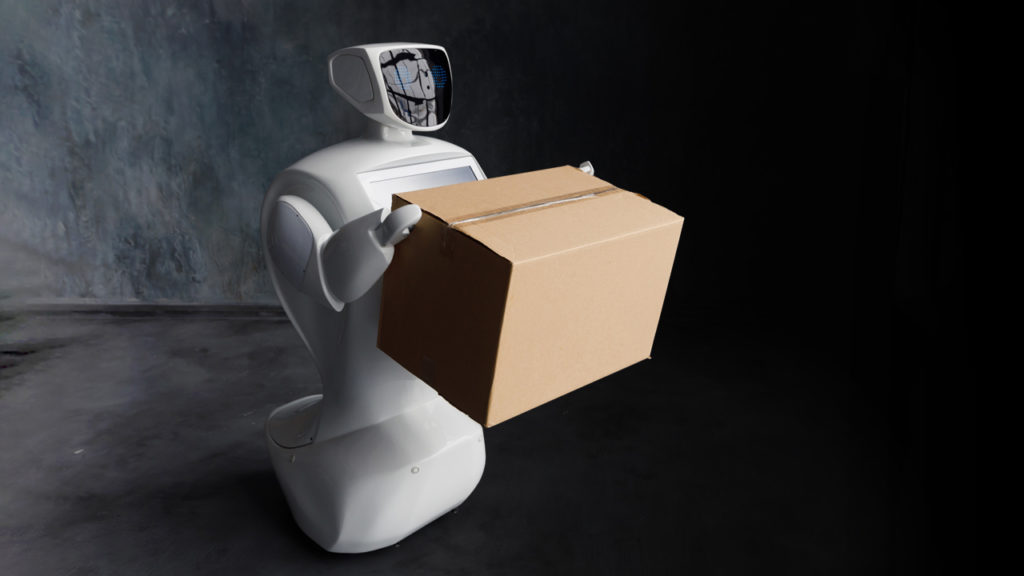 At first sight, the machines are not much to look at – hardly like classic robots at all. They’re colorful and sleek, but they look more like expensive suitcases lying on their sides than the most cutting-edge examples of artificial intelligence (A.I.) in the logistics field.
But once these little rectangles start moving by the dozens on nearly unseen wheels, flawlessly gliding around each other, emitting only the faintest whirring sound, they begin to demonstrate their amazing ability to move independently, never once bumping into one another or the many obstacles in this complex warehouse environment.
Remarkably, these autonomous mobile robots (AMRs) have physical strength as well. As one positions itself precisely beneath a 2-meter-tall stack of merchandise and, it slightly expands its width, lifting the stack a few centimeters off the floor and whisks it away to another predetermined spot for humans – or other robots with mechanical arms – to pick out ordered goods.
By blending robotics, automation, and machine learning into the warehousing environment, these floor machines are finding new ways to offset long-standing challenges, such as the shrinking labor market, data collection and the demands of high-velocity e-commerce business models.
Made most famous by Amazon, one of the early versions of these small, boxy warehouse workhorses, created by Massachusetts-based Kiva Logistics, became the symbol of warehouse efficiency when they were first rolled out in 2003.
Rather than rely on humans and a complex arrangement of conveyors belts to move orders through the warehouse, the Kiva AMRs would pick up the stacks or merchandise and bring them to the pickers themselves to reduce walking times. Amazon later purchased Kiva (since renamed Amazon Robotics) in 2012 and now operates more than 100,000 of the little orange units across its vast network.
But logistics companies that think they know everything about robotic warehouse vehicles based on Amazon’s experience may already be behind the curve.
“The market has changed fundamentally in the last few years,” said John Stikes, director of innovation and e-commerce at Germany-based forwarder DB Schenker. The difference, he said, is in the advanced levels of A.I. and machine learning that is being used for advance forecasting. “The items and devices that are being interconnected every year in the internet of things are growing at such a scale that forwarders can now handle an immense assortment of products – it’s a gamechanger.”
Today, several logistics companies, such as DB Schenker, XPO Logistics, DHL Supply Chain and others, are collaborating with dozens of robotics firms to blend innovative, autonomous logistics technology into their operations.
As robotics continues to pave new inroads in the logistics environment, these systems, paired with these forwarders’ inventory management systems, are making warehouses faster, smarter and more efficient than ever. These systems may also help determine what warehouses will look like five to years from now.
“Heavy acceleration of adoption of the technology is where you get the democratization of robotics,” Stikes said. “It now makes sense.”