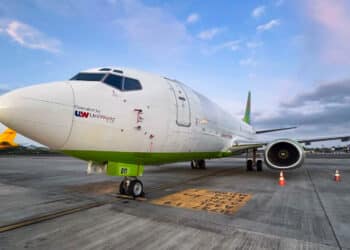
UPS moves to promote Foreign Trade Zone opportunities in a world of uncertainty


International trade is becoming increasingly complicated thanks to tariffs, trade agreements and political maneuvering such as Brexit. Having a logistics partner to guide companies through such uncertainties is certainly beneficial as complexity increases. To that end, in a well-timed move, UPS recently announced the incorporation of foreign trade zone (FTZ) capabilities within its customs brokerage, warehousing, logistics and transportation business.
Established by the United States Congress in 1934, FTZs are designed to help grow the economy by making the U.S. more competitive with other nations for global investments and job creation.
According to UPS’ press release, an FTZ program allows companies to ship and store goods free of import surcharges. Customs duties and other levies are deferred until the product enters U.S. commerce. In addition, duties are not paid if goods in an FTZ are subsequently exported out of the zone and beyond U.S. commerce. Companies can also use alternative manufacturing techniques within an FTZ to obtain a different tariff classification that results in a lower duty rate than the original.
In other words, with an FTZ, one not only avoids multiple processing fees, but also pays duties only once the goods are distributed in the U.S. and not before.
The new service offering comes by way of the 2017 acquisition of Zone Solutions, a specialist in navigating FTZ operations by providing managed services, systems implementation and consulting. In addition to the Zone Solutions acquisition, UPS also acquired Sandler & Travis Trade Advisory Services (STTAS) during the same year. STTAS is an independent provider of global trade management services, with almost 70% of its employees based outside of the U.S.
Also included in the UPS announcement was the designation of four of its U.S. gateway airports as FTZs. These airports are Chicago’s O’Hare International (ORD), Dallas/Fort Worth International (DFW), Los Angeles International (LAX) and New York’s JFK.
Currently, there are 276 authorized FTZs across the U.S. According to the National Association of Foreign-Trade Zones, for 2017 (the most recent year for which data is available), the value of merchandise received at U.S. FTZs increased by 9.6% to $669.2 billion, with merchandise received at distribution operations increasing by 15.5% to $259.1 billion, and merchandise received at production operations increasing by 6.2% to $410.1 billion.
Additional findings from the National Association of Foreign-Trade Zones found that the largest industries involved in zone production activity in 2017 were in the oil refining, automotive, electronics, pharmaceutical, and machinery/equipment sectors.
This latest move by UPS could also potentially benefit e-commerce providers such as Amazon and Alibaba. According to several air cargo providers, e-commerce cross-border volumes are growing, but volumes have often created not only backlogs but security concerns from the U.S. Customs and Border Protection (CBP). Earlier this year, the CBP published their e-commerce strategy and as part of it, announced on Aug. 22 that it would pilot voluntary data collection on e-commerce shipments.
The pilot is voluntary for shippers and carriers shipping packages via air, rail or truck and allows CBP to collect additional origin, content, tracking and recipient information on cross-border shipments with import values less than $800. The pilot, however, will not cover packages carried via the postal service, ocean freight, or those destined for a foreign trade zone.
CBP pilots such as this and future ones will likely expand to include FTZs and could perhaps follow similar measures that other countries have implemented to ease congestion while encouraging e-commerce cross-border interactions.
For example, in 2012, the Chinese government introduced a pilot program that introduced specific trade zones for cross-border e-commerce businesses. Qualified e-commerce companies are allowed to buy goods from abroad and store them in bonded warehouses in these pilot zones. Tariff payments are made after the goods are sold to consumers.
In addition to bonded warehouses, foreign firms are also able to own 100% of their business in the Shanghai FTZ, which includes the Shanghai Pudong Airport (PVG), versus establishing a local joint venture to operate in China.
Another example comes from Amsterdam’s Schiphol Airport (AMS). In partnership with the Dutch Customs Authority and the Schiphol cargo community, VENUE, is an e-commerce declaration program that requires only a simplified pre-declaration and allows packages to clear customs without prolonged holdups or scrutiny. The agreement is in place through the Union Customs Code transition period, which ends January 2021 for most customs formalities. VENUE declaration will be available until 3Q 2019.
A number of opportunities for FTZs exist and the use of these areas will continue to grow as international trade becomes even more complicated. Supply chains are global and will remain so despite recent trends favoring regionalization. This new announcement is a matter not only of good timing for UPS, but is a very smart move. Expect other carriers to follow suit.
Cathy Morrow Roberson is founder and president of the logistics-focused market research firm, Logistics Trends & Insights, based in Atlanta. Previously, Cathy spent several years with consulting firms, as well as with UPS Supply Chain Solutions, where she supported its market, operations, competitive and mergers & acquisition research and analytics. She also is a Senior Consultant at Cargo Facts Consulting and writes a weekly column for Air Cargo World.