
How Aircraft Conversion Helps Keep Global Trade Moving

As demand for air freight grows, passenger-to-freighter conversions give cargo operators another way to add capacity and adapt their fleets.
Air cargo carries less than 1% of world trade by volume, yet accounts for more than 33% of its value, according to IATA. Much of that cargo depends on speed and reliable access to capacity. As trade patterns change and e-commerce grows, operators need freighters suited to different routes, payloads, and schedules. Passenger-to-freighter conversion helps meet that need by bringing existing aircraft into cargo service.
Meeting the demand for freighter capacity
Demand for freighter aircraft is expected to grow substantially over the next two decades, driven by both expanding cargo markets and fleet replacement. Boeing’s Commercial Market Outlook 2026–2045 projects the global freighter fleet to increase from 2,395 aircraft in 2025 to 4,010 by 2045, requiring 2,930 factory-built and converted freighter deliveries. Cargo Facts Consulting’s latest 2026–2045 forecast also anticipates significant growth, projecting a global jet freighter fleet of 3,459 aircraft by 2045 and approximately 2,539 additions over the period. Passenger-to-freighter conversions will remain a key part of this fleet development, complementing new-build freighters and giving operators additional options to expand capacity and replace aging aircraft.
IAI has built its passenger-to-freighter conversion business around that demand. It has delivered more than 350 converted cargo aircraft and, through its Boeing 767-200 and 767-300 programs, holds over 60% of the medium-size freighter conversion market. That position reflects the role conversions can play in keeping established aircraft types productive while supplying capacity to cargo networks.
Expanding the options for operators
IAI’s conversion portfolio now includes the Boeing 777-300ERSF and the Airbus A330-300BDSF. Together, the programs offer operators options across different widebody cargo requirements, alongside IAI’s established conversion programs.
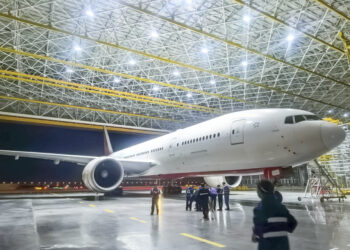
The 777-300ERSF, known as The Big Twin, has moved from certification into commercial service. IAI has established a global network of conversion centers to support the program’s growth. The converted aircraft offers a high-quality cargo solution at approximately one-third of the cost of a dedicated freighter. According to the latest program figures supplied for this article, 12 aircraft have been delivered to customers and the fleet has logged more than 30,000 flight hours.
The A330-300BDSF is progressing through its certification program. Its first flight in September 2026 marked a significant step toward commercial service. Designed for regional and medium-haul cargo operations, it will also help IAI address the diminishing supply of Boeing 767-300 passenger aircraft available for conversion. IAI is targeting dual FAA and EASA certification by early 2027.
The value beyond the aircraft
For operators, conversion is a way to match fleet investment to cargo demand. Cost-effective, eco-friendly options in the medium and large freighter categories can help carriers manage transport costs while adding capacity for e-commerce and time-sensitive shipments. Without affordable options, shipping costs could potentially exceed the value of some goods and make certain trade routes economically unfeasible.
The wider value of conversion lies in that flexibility. It gives carriers more ways to serve changing routes and cargo volumes, while helping the air freight industry provide the capacity on which high-value trade depends. As demand grows, the question is not simply how many freighters the market will need, but how operators can bring the right capacity into service at the right time.
Meet IAI at Cargo Facts Symposium 2026 to discuss your fleet requirements and discover the right cargo conversion solution for your needs.




Cargo Facts Free Newsletters