
West Coast ports reopen to months-long backlog

 Following a nine-month-long dispute over an extended labor contract between port owners and longshoremen, 29 ports along the West Coast of the United States are back to full capacity when a new five-year contract was tentatively agreed to on Friday. Delays created by the temporary closures and repeated slowdowns at the ports over the last several months, however, have created a backlog that is expected to continue for at least six to eight weeks – possibly longer.
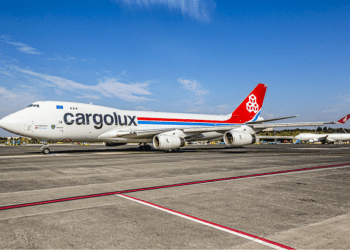
Because of the backlog, trans-Pacific airfreight charter business from Asia has soared as retailers desperately sought alternatives to seafreight to deliver virtually all types of cargo to the North American market. In some cases, rates for charter aircraft more than doubled and airfreight space became scarce.
Since Saturday, 20,000 workers under the International Longshore and Warehouse Union (ILWU) have returned to work at full strength to begin unloading the dozens of container ships that have been anchored at ports along the coast for the last week, waiting for the dispute to be settled. The accord came three days after the Obama Administration sent U.S. Department of Labor Secretary Thomas Perez to help mediate a resolution between ILWU and the Pacific Maritime Association (PMA), which represents the port owners.
The loss of the ports was felt most acutely by Asian auto manufacturers that needed to ship parts to factories in the U.S. and Canada, and were forced to resort to much more expensive airfreight. Japan’s Honda Motor Co. said its production targets are behind by 25,000 vehicles in February and that two of its facilities in Canada and Indiana will continue to experience delays until parts arrive on March 2. Toyota Motor Corp. said it had to reduce overtime at its U.S. factories.
The U.S. Meat Export Federation said its members had to shoulder the extra cost of storing millions of pounds of beef and pork in refrigerated units, and had to ship them by air. Others decided to use Canadian or Mexican ports.
Farmers represented by the Agriculture Transportation Coalition (ATC) said consumers in Asia should expect some shortages in crops such as oranges, potatoes and soybeans, with much of those crops suffering from spoilage upon arrival. An ATC spokesman said some farmers may have lost some Asian markets because of the delays.
At the West Coast’s two largest port, Los Angeles and Long Beach, Calif., the bottleneck is being described as the worst since 2004, when a rail delay halted cargo shipments for several days. Over the weekend, 35 container ships were anchored off the harbor, waiting for their turn to unload. The number of delayed ships in December was four, according to Bloomberg.
The American Association of Port Authorities said the delays have affected nearly every American business in some way, as about US$3.8 billion worth of goods move in and out of U.S. seaports each day, with the West Coast ports handling almost half of it; about 70 percent of the country’s Asian imports flow through the West Coast ports. Had the work stoppage continued, various manufacturing and retail groups estimated the cost to the overall U.S. economy at US$2 billion per day.

Cargo Facts Free Newsletters