
Bridges to Breakthroughs: How free trade can survive in a protectionist world

How to build bridges
It turns out the logistics sector’s global reach provides a range of tools to build bridges and address potential threats to its business, regardless of whether they are minor or major.
DHL’s Laney advised companies to avoid reinventing their business under current circumstances. Circumstances, Laney explained, can change overnight, making it important to stick to “the value that you are bringing to your final customer.”
For companies worried about protectionist regulations, Laney recommended developing alliances and relationships with domestic firms, citing the success of Toyota. “They have done very well at aligning themselves with suppliers and other U.S. companies to make themselves appear like they are a U.S. company.”
Toyota, despite being a Japanese firm, has established factories and supply chains that are deeply rooted in the U.S. economy. That makes the car manufacturer less susceptible to disruption, while also preempting accusations of foisting a “raw deal” on its host country. When No. 45 inevitably went off on the automobile giant, Toyota responded that, in addition to being part of America’s “cultural fabric,” the company had sunk an almost $22 billion investment into the U.S., creating tens of thousands of jobs.
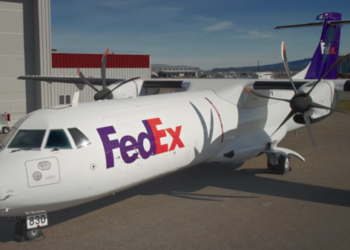
There’s also a civic component as well, which has been spearheaded by the likes of FedEx founder Fred Smith, who has publicly defended free trade as a job-creating engine, and blasted Trump’s protectionist rhetoric. When the TPP finally sank, Smith delivered its eulogy on Fox Business, and warned that, “the United States being cut off from trade would be like trying to breathe without oxygen.”
Smith isn’t alone. “The best weapon against populism is to invest in education and new job profiles to give people perspective and the hope for a better tomorrow,” DHL’s Appel explained.
Laney agreed, stressing that companies need to, “become engaged in the debates around nationalism and trade policies.” His advice mirrored that of Appel, who told shareholders that, “World trade drives prosperity, and prosperity promotes peace. We therefore don’t need less globalization, but more – and we need it now and sustainably.”
From a purely operational standpoint, logistics companies are already well-suited to mitigate future threats. “Uncertainties, volatility and changing market dynamics have long become a part of our business,” said Sandro Hofer, corporate media relations manager for Panalpina. Hofer suggested instead that companies could, “counterbalance it to a certain extent by having a global network, a balanced industry mix, a flexible organization and the best possible transparency in order to make timely and educated decisions.”
Panalpina’s country manager for UK and Ireland, Chris Cooper, added that his company’s active participation in trade groups, such as BIFA, was an important part of staying ahead of Brexit-related threats. Doing so, Copper said, put Panalpina in a position to, “manage any changes and advise customers accordingly.”
Finally, the complexities of e-commerce can be mitigated by a combination of old-fashioned management, new platforms, or some combination thereof as Schiphol Airport and the U.S. government are demonstrating.
Schiphol’s Venue program allows verified companies to bypass declarations for shipments under a certain value, granting e-commerce shippers the ability to move large quantities of low-value packages through the airport with the same ease as postal companies and integrators. While this solution is very straight forward, it represents a low-tech answer to the question of how authorities should response to increased shipments and data generated by e-commerce. The solution: Create trust and act on it.
The U.S. is pursuing a more tech-intensive solution, its Automated Commercial Environment (ACE), the primary U.S. government system through which the trade community reports imports and exports, and the government determines admissibility. Importantly, ACE incorporates a lot of paperless technology that has been slow to catch on, incentivizing stragglers to jump on the paperless wagon. Laney was enthusiastic about ACE, saying that the single window system would speed up trading across the board, and allow the government to “get a better view of what is coming in and out of the country, for statistical as well as for security purposes.”
Ultimately, the challenges ahead for the international logistics business are nothing new. Whether it be conflict or protectionism, what makes the current situation unique is that companies have become both intensely local, and transnational in an unprecedented manner. But the overwhelming response to the specter of protectionism seems to be that global trade is an unstoppable juggernaut, and the bridges created by air cargo can surmount any walls.
Appel summed up the sentiment when he told The Economic Times that, “we never have lived in a better place than now,” for global trade.
Cargo Facts Free Newsletters