
Cargo Facts

No products in the cart.

SUBSCRIBE
  • NEWS
  • AI TOOL
  • INSIGHTS DATA
    • Cargo Facts Insights Overview
    • Dashboard
  • FEATURES
  • LIVE EVENTS
  • VIRTUAL EVENTS
    • Cyber Aviation Global Forum
    • Webinar Library
  • PODCAST
  • CONSULTING
Tuesday, July 14, 2026
Log In
No Result
View All Result
  • Freighter Transactions
  • Capacity & Demand
  • Conversions
  • Carriers
  • Routes
  • AAM
  • The Future
  • Cybersecurity
Cargo Facts
  • NEWS
  • AI TOOL
  • INSIGHTS DATA
    • Cargo Facts Insights Overview
    • Dashboard
  • FEATURES
  • LIVE EVENTS
  • VIRTUAL EVENTS
    • Cyber Aviation Global Forum
    • Webinar Library
  • PODCAST
  • CONSULTING
Log In
No Result
View All Result
Cargo Facts
No Result
View All Result

Pilot shortage inhibiting growth of regional carriers

Charles KauffmanbyCharles Kauffman
October 13, 2016
in Archive
0
Share on FacebookShare on LinkedIn

MIAMI- At this year’s Cargo Facts Symposium in Miami, Tim Komberec, president of Idaho-based Empire Airlines spoke on a round-table panel discussion of issues facing all-cargo carriers. Although market conditions have enabled Empire to enjoy steady growth over the years, Komberec said that for the first time in his career, his airline had stopped pursuing growth because of a severe shortage of available pilots.

An ATR 72F operating in FedEx livery. Photo: Wikimedia/Kok Vermeulen

In addition to his role at Empire, Komberec serves as board chair of the Regional Air Cargo Carriers Association (RACCA), an organization that represents many of the small carriers operating feeder services for the big integrated express companies. Earlier this year, RACCA released a report that found carriers connecting small-town America to the express companies’ large package delivery hubs are unable to add additional routes, or even being forced to downsize, due to a lack of pilots. The irony, he added, is that the “demand is [still] out there.”

US-based regional carriers say the problem stems from congressionally mandated pilot requirements that became effective in 2013, in response to the 2009 crash of Colgan Air flight 3407. The amended regulations dramatically increased the number of flight hours required to obtain a commercial certificate from 250 hours to 1,500 – a 500% increase. Rising pilot certification costs have also exacerbated the problem – many have likened the new cost of flight school to the cost of a Harvard Law School education. A host of other organizations, including the National Transportation Safety Board and the Federal Aviation Administration, join RACCA in opposing the new requirements, arguing that the US Congress must intervene to change the rule.

Meanwhile, the Air Line Pilots Association International (ALPA), the world’s largest pilots’ union, takes a different stance, arguing that such regulations keep make commercial aviation safer. According to the ALPA, low pay is deterring potential pilots. While there is no doubt that the pay differential separating regional pilots from their mainline counterparts, flying turboprops is often a solid entry point, and the first rung in a career path which can ultimately prepare pilots to operate larger aircraft.

Despite attempted amendments which would allow pilots to use their training flights at an airline as credit toward the 1,500-hour goal, Congress seems unwilling to reduce the requirement.

In the video below Tim Komberec introduces Empire Airlines, and shares his views on this increasingly important issue.
Tags: Empire Airlines
Previous Post

CFS 16: Cargo carriers eye e-commerce, partnerships for growth

Next Post

ELEVATE 16: Innovation in Air Freight Logistics

Related Posts

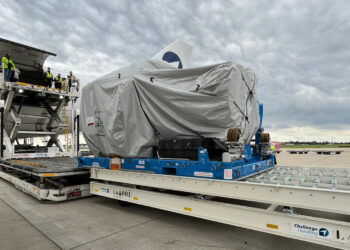
An engine is transported on a specialized dolly at Liege Airport
Archive

Challenge Group launches engine dolly at LGG 

September 23, 2024
(Photo/Canstock)
Archive

New de minimis executive action targets Chinese retailers

September 18, 2024
Containers are parked at a DB Schenker logistics hub in Grossbeeren, Germany
Archive

CVC willing to bump DB Schenker bid after losing to DSV

September 18, 2024
Next Post

ELEVATE 16: Innovation in Air Freight Logistics

Please login to join discussion

Cargo Facts Free Newsletters

Cargo Facts Connect Podcast

  • About Us
  • Help Center
  • Contact Us
  • Privacy & Usage Terms
  • ADA Compliance
  • Advertise
  • Archive
  • The Dahl Scholarship

 [wt_cli_manage_consent]

Follow Us

twitter linkedin podcast podcast podcast
© 2026 Royal Media
No Result
View All Result
  • News
    • Freighter Transactions
    • Capacity & Demand
    • Conversions
    • Carriers
    • Routes
    • AAM
    • The Future
  • Insights Data
    • Cargo Facts Insights Overview
    • Dashboard
  • AI Tool
  • Features
  • Live Events
  • Virtual Events
    • Cyber Aviation Global Forum
  • Podcast
  • Consulting
  • Subscribe
  • Log In / Account

© 2022 Royal Media & Cargo Facts

Welcome Back!

Login to your account below

Forgotten Password?

Retrieve your password

Please enter your username or email address to reset your password.

Log In
No Result
View All Result
  • News
    • Freighter Transactions
    • Capacity & Demand
    • Conversions
    • Carriers
    • Routes
    • AAM
    • The Future
  • Insights Data
    • Cargo Facts Insights Overview
    • Dashboard
  • AI Tool
  • Features
  • Live Events
  • Virtual Events
    • Cyber Aviation Global Forum
  • Podcast
  • Consulting
  • Subscribe
  • Log In / Account

© 2022 Royal Media & Cargo Facts