
What stands between Brussels Airport and another great cargo year?

 What could stem rapidly expanding cargo operations at Brussels Airport?
Trump, economic uncertainty, and Brexit would all have been acceptable answers, but these days it is the Brussels Government that stands between BRU and continued cargo growth.
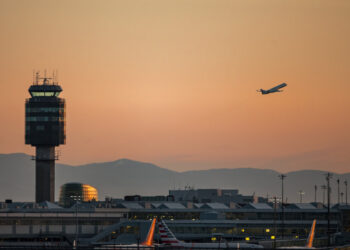
Unless opinions can be swayed, beginning 1 March, the Brussels government will abolish an existing noise tolerance, and increase enforcement of nighttime flight restrictions. Non-compliant flights in turn, could result in hefty fines which could push some operators to neighboring airports. Still, there is no reason to panic just yet. Negotiations are ongoing, and BRU Cargo’s excellent operational performance in 2016 is a testament to importance and economic value of airfreight to the Brussels region.
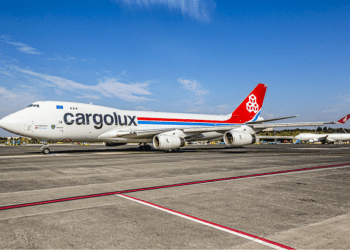
First, the good news; December cargo volumes were up substantially over the same month in 2015 at BRU, rising 22.0% y-o-y to 49,519 tonnes. An increase of nearly 250 freighter flights over the previous year boosted the December airfreight handle associated with all-cargo flights by 88.9%. Although charter activity is reflected in this figure, many of the freighter flights calling at BRU utilize 777F and A330-300F airframes—and compared to older aircraft like the 747-400F, would be less-severely impacted by noise restrictions. Still, 747-400Fs played a significant role in the airport’s 2016 cargo operations, and increasing restrictions could push at least a few airlines to move to competing airports in the region.
This problem is not unique to Brussels. Airports that were built far from the cities they serve have seen the cities expand, and, as suburbs replace farmland, residents begin complaining about noisy aircraft – never mind that building or buying their house close to an airport was their own choice. Further complicating matters is that various levels of government are involved, and laws and regulations are often put in place without enough thought about the long-term consequences. Brussels Airport located in Zaventem is no exception. Although the airport itself is in the province of Flemish Brabant, nearby Brussels is an independently governed region with the ability to implement flight regulations which vary from those in Flemish Brabant.
Air freight is an important contributor to the economy, with employees coming from all three regions of Belgium – but it is easy for politicians to forget this when voters are clamoring for noise restrictions right now. We hope that BRU’s management will be able to convince regional and national legislators to think the entire issue through carefully before making decisions that may ultimately do more harm than good.
Those interested in learning more about just how Brussels Airport Cargo managed to convince the Brussels government not to touch existing noise tolerances should join us at Cargo Facts Asia in Shanghai, 25 – 26
April, where Steven Polmans, Head of Cargo, Brussels Airport Company, will speak on a session devoted to “Airport Evolution: The Rise of Air Cargo Communities.” To register, or for more information, go to CargoFactsAsia.com.
And now for a cross-section of the freighters landing at BRU:

Cargo Facts Free Newsletters