
Destination Unknown: What the future may hold for freighters

 By its very nature, airfreight logistics is a global, macro-economic industry, but it’s sometimes easy to fall into the habit of short-range thinking.
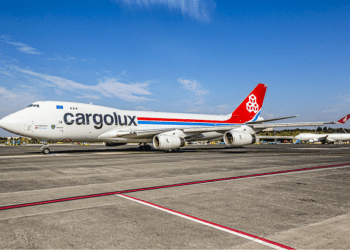
Take freighter aircraft, for example: Earlier this year, much of the buzz in the industry was about the coming decline of maindeck cargo. With the rise of belly capacity in today’s widebody passenger jets, legacy carriers such as Air France-KLM and IAG Cargo were shedding freighters as fast as they could. Scores of 747-400Fs, with decades of life still left in them, were being parked in the desert in favor of more fuel-efficient, new-build freighters and twin-engined passenger aircraft, with cavernous belly holds.
The rumors of the death of freighters, of course, were wildly exaggerated, as can be seen by the latest long-range freighter forecast reports released from Boeing, Airbus and Air Cargo Management Group (ACMG, a consultancy affiliated with Air Cargo World). “There has been no slowdown in production freighter deliveries in the first half of this year, but orders have, for the first time in a several years, outpaced deliveries, and the backlog for the four freighter types currently in production [A330-200F, 767-300F, 777F, and 747-8F] has risen, at least temporarily reversing a downward trend,” said Alan Hedge, senior director of ACMG.
In July, FedEx placed an order with Boeing for fifty 767-300 freighters, plus options for fifty more, Hedge said. The order specifies that the fifty firm orders will be delivered beginning in FedEx’s 2018 fiscal year, with delivery of all fifty by FY2023. FedEx also has thirty-five 767-300Fs and seventeen 777Fs still to be delivered from previous orders with Boeing, as well as fifteen 757-200s awaiting conversion to freighter configuration by ST Aero. That same month, AirBridgeCargo announced its plan to increase its existing 747-8F fleet with an MoU for twenty more -8F units from Boeing, to be added to the airline’s fleet over the next seven years.
Taking the long view – up to 20 years into the future – it’s clear from these forecasts that freighters will not only survive but thrive in many parts of the world, as global demand for airfreight and express delivery rise, e-commerce continues its rapid growth, and aging freighters get replaced with newer, more efficient models.
Earlier this year, Airbus released its “Global Market Forecast: Flying By Numbers, 2015-2034” report, and ACMG published its “Twenty-Year Freighter Aircraft Forecast – 2015 Through 2034.” Boeing also released its “Current Market Outlook: 2015-2034” (CMO), which followed Boeing’s biennial “World Air Cargo Forecast” (WACF) that was released last year, providing added insight into underlying air cargo trends. Although each forecast used its own methods and came up with somewhat different conclusions, each agreed that freighters will be a part of the airfreight logistics universe indefinitely.
By taking a deeper dive into the statistics reported in these four forecast reports, freight forwarders and logistics companies can also reach some conclusions about the current health and possible future of the air cargo industry.

Cargo Facts Free Newsletters